

- Key Features of Explosion Proof PTZ Controllers
- Benefits of Using Explosion Proof PTZ Controller
- Applications of Explosion Proof PTZ Controller in the UK
- How to Choose the Right Explosion Proof PTZ Controller
- Installation Best Practices
- Maintenance & Inspection Guidelines
- UK Standards & Compliance
- Real-World Use Cases
Summary
Explosion proof PTZ controllers are essential for safe and precise camera operation in hazardous UK environments such as oil, gas, and chemical plants. SharpEagle UK offers ATEX and IECEx-certified controllers designed to prevent sparks, withstand harsh conditions, and enable remote monitoring without risking personnel safety. This guide covers their working principles, key features, benefits, applications, installation best practices, maintenance, and compliance with UK standards, helping industries select and implement the right PTZ control solutions.Introduction
Remote surveillance has become a vital requirement in hazardous industries across the UK, where monitoring high-risk areas is critical for safety and operational efficiency. Standard PTZ (pan-tilt-zoom) controllers, while effective in conventional settings, are not suitable for explosive environments due to the potential risk of ignition from electrical sparks or overheating. Explosion proof PTZ controllers provide a safe and reliable solution for industrial facilities, enabling operators to maintain control of CCTV systems without compromising personnel safety or regulatory compliance.
What is an Explosion Proof PTZ Controller?
An explosion proof PTZ controller is a specialized device designed to operate PTZ cameras in environments where flammable gases, vapors, or dust are present. Unlike standard controllers, these devices are encased in flameproof, sealed housings to prevent sparks or heat from igniting surrounding hazards. Their primary purpose is to allow operators to remotely manage camera functions such as pan, tilt, and zoom safely from a secure control room. These controllers are critical in industries where human entry into hazardous areas poses significant risks.
Why Explosion Proof PTZ Controllers Are Critical in Hazardous Areas
Preventing Ignition Risks
In explosive environments, even a minor electrical spark can trigger catastrophic events. Explosion proof PTZ controllers are designed to eliminate such hazards, using flameproof housings and intrinsically safe circuitry to ensure complete operational safety.
Safe Remote Camera Operation
Operators can monitor and control cameras remotely without physically entering dangerous zones. This reduces the risk of accidents while maintaining consistent surveillance coverage.
Supporting Safety & Compliance
Certified to ATEX and IECEx standards, explosion proof PTZ controllers help UK industries meet legal and regulatory requirements for hazardous area operations, ensuring safety while maintaining operational efficiency.
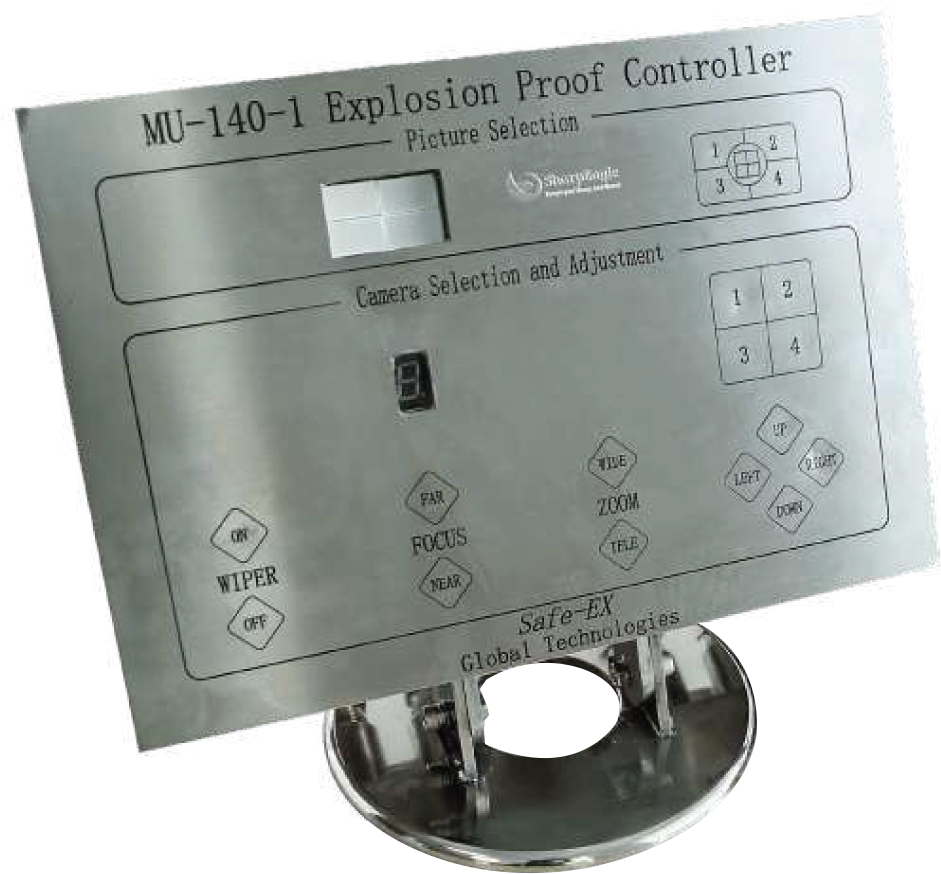
How Does an Explosion Proof PTZ Controller Work?
These controllers rely on robust design principles to function safely in explosive environments. The flameproof enclosure contains any electrical sparks generated within the device, preventing them from reaching the external hazardous atmosphere. Electrical isolation and surge protection ensure stability even under harsh electrical conditions. Communication is handled via industry-standard protocols such as RS-485, IP, or Ethernet, enabling seamless integration with various camera systems while maintaining reliability and safety.
Key Features of Explosion Proof PTZ Controllers
- ATEX & IECEx Certified Housing: Ensures the device meets strict international standards for hazardous environments.
- Precision Joystick Control: Allows smooth and accurate pan, tilt, and zoom functions.
- Camera Compatibility: Designed to work with explosion proof PTZ cameras across different zones.
- Corrosion-Resistant Enclosures: Stainless steel casings withstand harsh chemicals, saltwater, and industrial contaminants.
- Wide Temperature Range: Operates reliably across extreme temperatures commonly found in industrial and offshore settings.
Benefits of Using Explosion Proof PTZ Controller
Enhanced Operator Safety
Personnel can monitor high-risk areas without exposure to flammable gases or hazardous chemicals.
Accurate and Smooth Camera Movement
Precision joystick control ensures optimal surveillance, minimizing blind spots and enhancing security coverage.
Reduced Manual Intervention
Remote control capabilities eliminate the need for frequent physical inspections in dangerous areas.
Long-Term Reliability
Durable, corrosion-resistant construction ensures continuous operation even in challenging industrial environments.
Applications of Explosion Proof PTZ Controller in the UK
Oil & Gas Refineries
Monitor critical equipment, pipelines, and storage tanks without risking personnel safety.
Chemical Processing Plants
Ensure real-time surveillance of volatile processes while maintaining compliance with ATEX and IECEx regulations.
Offshore Platforms and Marine Facilities
Controllers are built to withstand saltwater corrosion and harsh offshore weather conditions.
Power Generation Sites
Facilitate continuous monitoring of high-voltage equipment in hazardous zones.
Hazardous Control Rooms
Enable centralized control over multiple cameras in explosive or high-risk environments.
How to Choose the Right Explosion Proof PTZ Controller
Selecting the correct controller requires careful evaluation of:
- Zone Classification: Zone 1 controllers are suitable for frequent exposure, while Zone 2 is for occasional presence of explosive atmospheres.
- Camera Compatibility & Protocols: Ensure the controller supports the desired PTZ camera models and communication protocols.
- Control Interface: Joystick, keypad, or touch control based on operator preference.
- Environmental Resistance & IP Rating: Ensure adequate protection against dust, moisture, and temperature extremes.
Installation Best Practices
Safe Mounting: Install controllers in secure, non-hazardous locations wherever possible while maintaining cable accessibility.
Cable Routing & Gland Sealing: Use explosion proof-rated cables and glands to prevent ingress of flammable gases.
Grounding & Bonding: Proper grounding minimizes static discharge risks.
Functional Testing: Conduct pre-commissioning tests to confirm controller performance under operational conditions.
Maintenance & Inspection Guidelines
Routine Functional Checks: Regularly verify joystick response and camera communication.
Enclosure & Seal Inspection: Check for cracks, corrosion, or compromised seals.
Cleaning Procedures: Follow safe cleaning methods suitable for hazardous areas to avoid damage or spark generation.
Periodic Compliance Verification: Ensure continued ATEX and IECEx compliance through scheduled audits and inspections.
UK Standards & Compliance
ATEX Directive (UKEX post-Brexit): Ensures equipment safety in explosive atmospheres.
IECEx Certification: International standard confirming explosion proof functionality.
HSE Guidance: UK Health & Safety Executive regulations for hazardous area equipment must be observed.
Industrial CCTV Compliance: Controllers must meet local industry requirements for hazardous zone surveillance.
Real-World Use Cases
Oil & Gas Plant Monitoring: Operators can oversee storage tanks and pipelines remotely.
Chemical Facility Surveillance: Hazardous chemical processes are monitored safely from control rooms.
Offshore Platform Safety: Continuous surveillance despite harsh marine conditions.
Hazardous Process Monitoring: Enables early detection of leaks, spills, or operational anomalies without risking personnel exposure.
Conclusion & Call to Action
Explosion proof PTZ controllers offer UK industries a combination of safety, precision, and compliance in high-risk environments. Certified controllers such as SharpEagle UK’s range prevent ignition hazards while enabling smooth remote monitoring. Choosing the right controller is essential for operational efficiency and regulatory adherence.
Call to Action:
Explore SharpEagle UK Explosion Proof PTZ Controllers today. Request expert consultation for hazardous CCTV systems and secure ATEX-compliant PTZ control solutions for your site.
