

Summary
A warehouse forklift safety checklist helps stop accidents and keep workers safe. Operators must be trained and know emergency plans. Forklifts should be checked every day for brakes, lights, horns, and cameras. Clear signs must be shown for forklift routes, walkways, and danger spots. Regular emergency drills prepare workers for problems. Forklifts need regular maintenance to work well. Following this checklist helps make warehouses safer and meet safety rules. It protects workers and keeps things running smoothly.Forklifts are essential tools in warehouse operations, allowing efficient movement of heavy goods and materials. However, they also pose significant safety risks if operated without proper precautions. A detailed forklift safety checklist can prevent accidents, protect workers, and ensure that daily operations run smoothly. This guide explores the most critical components of a warehouse safety checklist, covering everything from operator preparedness to hazard identification.
In busy warehouses across the UK, forklifts move thousands of tonnes of material daily but even a small lapse can lead to severe accidents or costly damage. A well-structured forklift safety checklist isn’t just a compliance formality, it's a proactive shield against risks, ensuring every operator, supervisor, and machine works in harmony. Smarter safety goes beyond ticking boxes; it's about using data, sensors, and vigilance to build a zero-accident workplace.
Forklifts play a critical role in warehouse and logistics operations across the UK supporting fast and efficient material handling. However, they also introduce serious safety risks due to blind spots, heavy loads, and constant movement in busy environments.
From industrial warehouses in the UK to high-speed logistics hubs and large-scale facilities forklift-related incidents can result in injuries, product damage, and costly downtime.
Implementing a structured forklift safety checklist is essential for maintaining a safe, compliant, and efficient workplace. This guide provides a comprehensive checklist tailored to modern warehouse operations across these key regions.
Forklift Warehouse Safety Checklist
Implementing a comprehensive forklift safety checklist ensures that operators and managers prioritise safety in every phase of operation. A well-prepared checklist identifies risks, establishes emergency protocols, and improves overall safety compliance. Below are the key categories to include:
Forklift Safety and Operator Checklist
Ensuring the safety of forklift operations starts with preparing the operator and inspecting the vehicle itself. Here are the most vital elements to include:
- Install Clear Signage: Clearly mark forklift paths, pedestrian walkways, and hazardous areas. Visual signage helps prevent confusion and miscommunication.
- Conduct Regular Emergency Drills: Employees should practice emergency response scenarios involving potential forklift accidents to ensure preparedness.
- Equip Forklifts with Emergency Stop Buttons: These provide operators with a means to stop machinery immediately in the event of dangerous situations.
- Daily Inspection Checklist: Operators should inspect their forklifts daily, focusing on brakes, lights, horns, and camera functionality. Regular inspections enhance vehicle safety and longevity.
- Perform Visual Inspections Before Operation: Operators must evaluate their surroundings for obstacles, uneven surfaces, or other risks before starting a shift.
- Log Inspection Issues: Maintain a record of findings during inspections to monitor recurring problems and facilitate maintenance.
- Use of Seatbelts: Operators must always wear seatbelts and remain within the vehicle's frame to reduce the risk of injuries during tipping or sudden movements.
- Monitor Fatigue: Fatigue can impair judgment. Managers should monitor operators for signs of tiredness, especially during long shifts.
- Train Operators on Safe Load Handling: Proper load management and understanding load stability are critical to preventing accidents and tipping.
- Safety Accountability: Establish a visible safety scoreboard to track accident-free days and encourage operator accountability.
These steps form the foundation of a strong forklift operator checklist, which all workers must adhere to. They emphasise preparation, consistent inspection, and personal responsibility.
Forklift Training and Warehouse Safety Checklist
Proper forklift training checklist development is essential for preventing mishaps. Training programs must educate employees on operating procedures, safety measures, and emergency response protocols. These should include:
- Comprehensive Safety Training: Forklift operators should receive training focusing on speed, safe lifting techniques, and effective distance maintenance.
- Regular Refresher Courses: Operators must attend regular safety refreshers to maintain compliance and understand updated protocols or equipment.
- Practical Training Exercises: Hands-on demonstrations enhance comprehension. They help operators understand proper load stability and weight distribution techniques.
- High-Visibility Clothing for Pedestrians: All warehouse employees must wear appropriate safety gear, such as high-visibility vests, to ensure they are easily seen by operators.
- Effective Communication Training: Train operators and warehouse staff on hand signals or two-way radio usage to facilitate clear communication and reduce collision risks.
- Safety Buddy System: Encourage mentorship by pairing experienced workers with new hires to promote safe practices.
- Conduct Periodic Safety Audits: Routine audits assess compliance with established safety protocols, identifying areas of improvement.
Implementing a warehouse training checklist guarantees that all employees are well-equipped with the knowledge and skills to mitigate risks.
Also Read: 10 principles of Forklift operational safety
Warehouse Equipment and Fuel Safety Checklist
The condition of machinery and its associated fuel supplies directly impacts overall warehouse safety. Diesel forklifts are popular, but they require specialised care to ensure safety. Here are the key components of a diesel forklift checklist:
- Proper Ventilation: When operating diesel forklifts indoors, ensure proper ventilation to eliminate risks from harmful fumes.
- Regular Maintenance: Conduct frequent diesel engine maintenance to avoid mechanical failure. This includes testing brakes, ensuring smooth steering, and inspecting the engine for wear.
- Safe Fuel Storage: Fuel should be stored in well-ventilated areas away from ignition sources to minimise fire risks.
- Safe Load Handling: Train all operators in proper load handling procedures to maintain stability and prevent dangerous tipping.
Following these points as part of your safety checklist for forklift operation reduces machinery failure risks and promotes a safer working environment.
Warehouse Hazards and Emergency Preparedness Checklist
Workplaces are filled with potential hazards, including machinery, slip risks, and improperly stacked materials. A proactive warehouse hazards checklist identifies these risks and provides solutions to prevent accidents:
- Identify Hazardous Areas: Clearly mark areas with heavy machinery, pedestrian traffic, or unstable surfaces to limit risk exposure.
- Review Incident Reports: Analyse past incidents to identify recurring patterns or overlooked hazards. This allows businesses to adjust protocols accordingly.
- Conduct Regular Risk Assessments: Routine hazard analysis identifies new risks and ensures that preventive measures are in place.
- Promote a Safety Culture: Encourage employees to report hazards without fear of retaliation, fostering open communication.
- Speed Limit Implementation: Establish and enforce warehouse speed limits to prevent collisions and accidents.
- Effective Communication Systems: Require the use of two-way radios or hand signals, especially in high-traffic areas, to maintain clarity and reduce risks.
Preparing for emergencies is another critical aspect. Emergency drills, clear escape routes, and proper first aid kits should all be part of warehouse safety plans.

Daily Forklift Safety Inspection Checklist
Daily inspections are essential for maintaining the operational safety of forklifts and preventing preventable breakdowns. A forklift safety checklist should include:
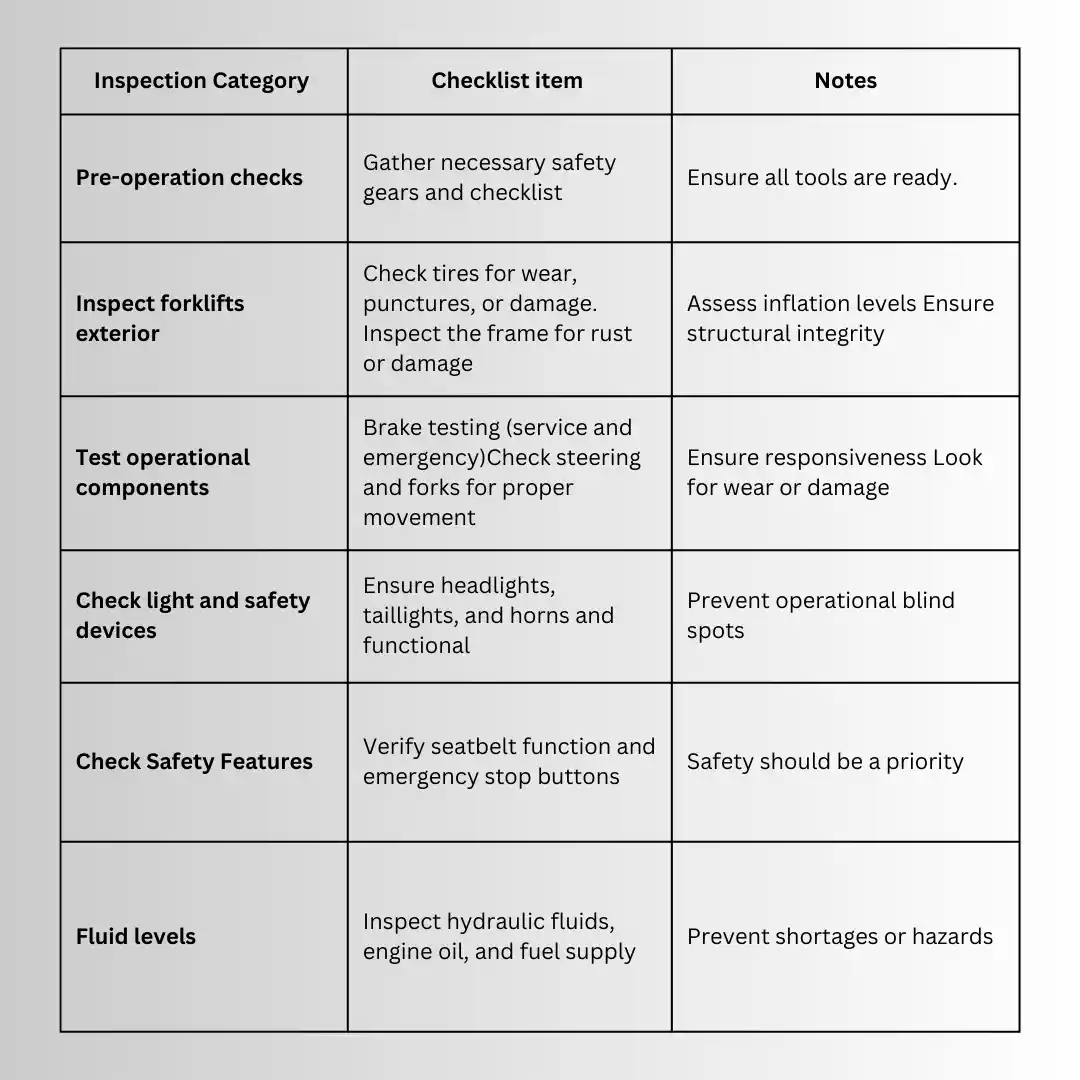
Regularly reviewing this checklist ensures compliance with safety standards and enables operators to spot issues before they escalate.
What UK Warehouse Operators Have to Get Right
United Kingdom – Safety Compliance & Regulations
Warehouses in the UK must follow strict HSE guidelines, including operator certification, equipment inspections, and incident reporting. A forklift safety checklist ensures compliance and reduces liability risks.
Productivity, ROI & Compliance Impact
- Reduced Accidents = Higher Productivity: Fewer incidents mean less downtime and better throughput.
- Regulatory Compliance: Aligns with HSE (UK) guidelines for industrial safety.
- Data-Driven ROI: Analytics from smart checklists and cameras help management identify bottlenecks and improve workflow efficiency.
Final Thoughts
The safety of forklift operations relies on regular inspections, training, and comprehensive safety checklists. A forklift safety checklist combined with a warehouse safety checklist provides managers and operators the tools they need to prevent accidents and ensure smooth operations. Implementing a thorough forklift training checklist reinforces safety by addressing both machine and human factors.
SharpEagle supports businesses in building effective safety protocols. Whether it's optimising training procedures, creating a proper safety culture, or ensuring machinery safety, our solutions are designed to keep workers safe and warehouses efficient.
Explore our safety solutions by visiting our website or book a free consultation call with our experts for customised solutions today!

FAQs
What is a warehouse forklift safety checklist?
A warehouse forklift safety checklist is a structured set of guidelines used to ensure safe forklift operations. It includes pre-operation inspections, operator safety rules, load handling procedures, and maintenance requirements. In regions like the UK, these checklists also help businesses meet regulatory compliance and avoid penalties.
Why is a forklift safety checklist important in the UK?
Forklift safety checklists are crucial because they standardize safety practices across operations. In the UK, they help meet HSE compliance requirements, while in the, they support safe operations in fast-paced logistics and industrial environments. They reduce accidents, protect workers, and improve efficiency.
How often should forklift inspections be carried out?
Forklift inspections should be conducted before every shift as part of a daily pre-operation check. In addition, detailed inspections and servicing should be scheduled periodically based on manufacturer guidelines and regional safety regulations in the UK.
Who is responsible for forklift safety in a warehouse?
Forklift safety is a shared responsibility. Operators must follow safety procedures and conduct inspections, while management must provide proper training, maintain equipment, and enforce safety policies. Regulatory bodies in the UK require employers to ensure a safe working environment.
Can technology improve forklift safety in warehouses?
Yes, modern technologies such as CCTV camera systems, proximity sensors, and AI-based detection significantly enhance forklift safety. These solutions are widely used in warehouses across the UK to reduce blind spots, prevent collisions, and improve operator awareness.
What are the most common forklift accidents in warehouses?
The most common forklift accidents include collisions with pedestrians, tipping over due to unstable loads, falling materials, and crashes caused by poor visibility. These risks are prevalent in warehouses globally, including in the UK making safety checklists essential.
Is forklift safety training mandatory in these regions?
Yes, forklift operator training is mandatory in the UK. Proper certification ensures that operators understand safety procedures, equipment handling, and risk management, which helps reduce workplace accidents and ensures compliance.
