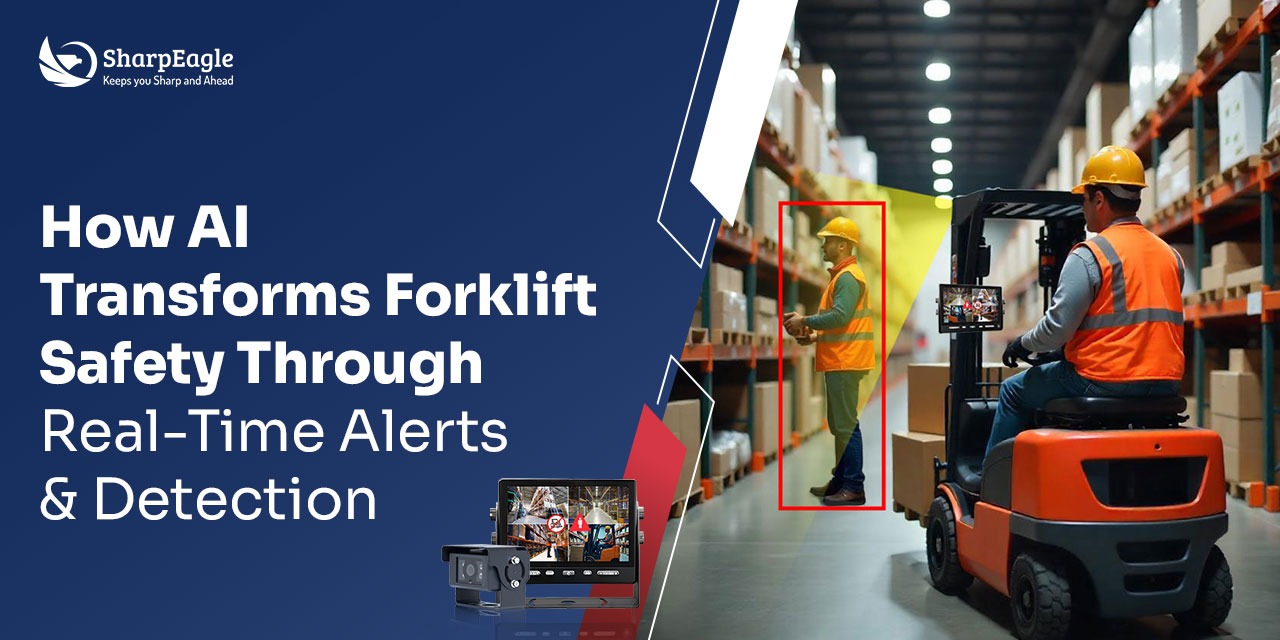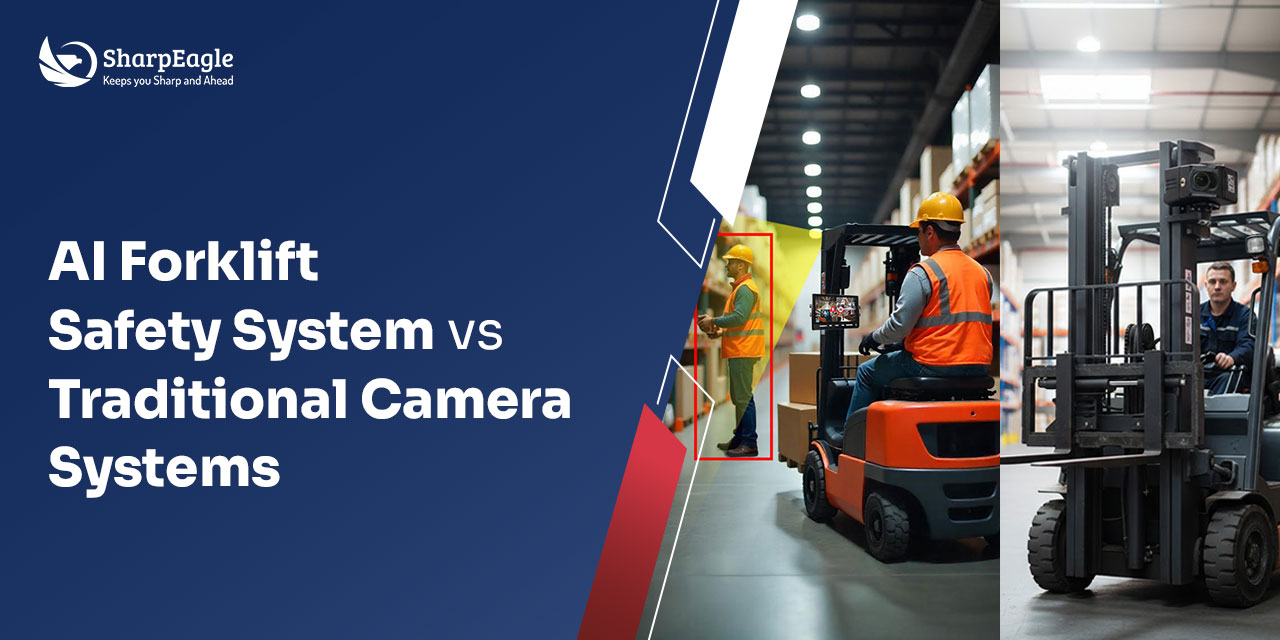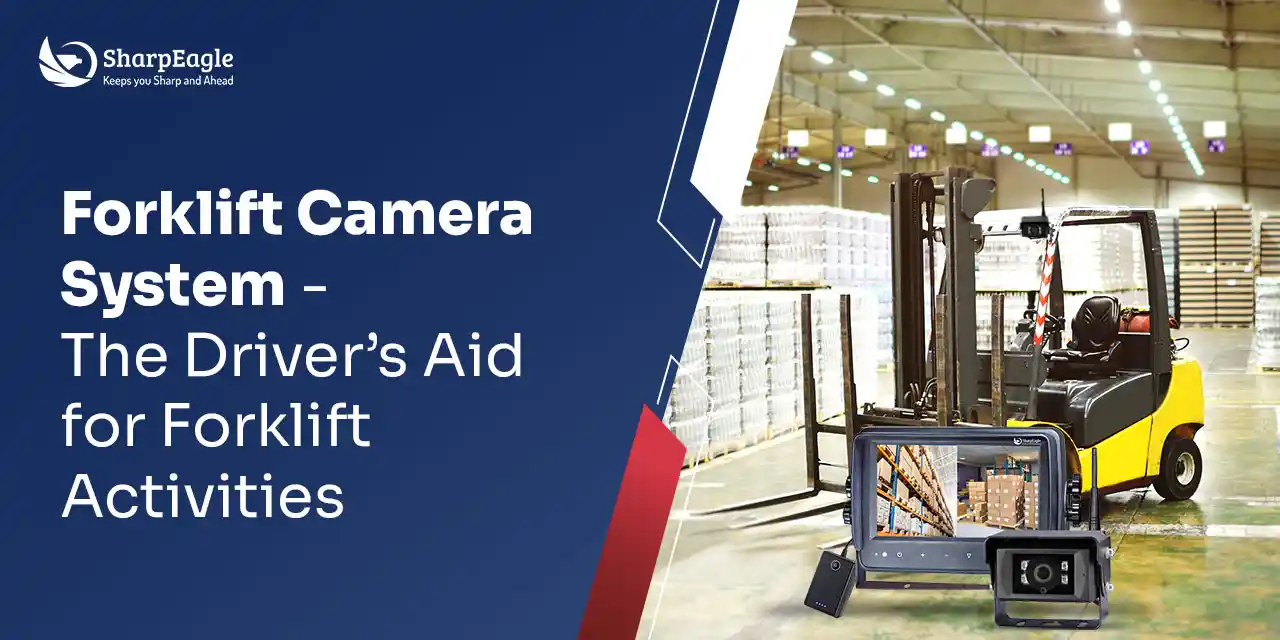
Poor visibility causes numerous forklift accidents in warehouses daily. Learn how forklift camera systems can revolutionise safety and optimise operations.
Forklift accidents caused by heavy loading and poor visibility are a significant concern for warehouses and storehouses today. Preventing such incidents has become imperative to ensure uninterrupted operations. While intensive training, strategic hiring, and equipment upgrades are essential measures, the issue of limited visibility remains a persistent challenge. One effective solution to enhance forklift visibility is the implementation of a Forklift Camera System.
Forklift operators play a critical role in warehouse and industrial operations, but they also face constant challenges—restricted visibility, blind spots, heavy loads and high-pressure environments. These challenges not only affect productivity but also significantly increase the risk of accidents and product damage.
One of the biggest issues drivers encounter is limited line of sight, especially when carrying bulky loads or operating in narrow aisles. Traditional methods like mirrors or manual guidance often fall short in fast-paced environments.
This is where forklift camera systems make a powerful difference. By providing real-time visual feedback, these systems help drivers operate with greater accuracy, confidence and safety—transforming the way forklifts are handled in modern warehouses.
Wireless forklift cameras address all your safety concerns effectively. This innovative technology has made significant contributions to improving employee safety in forklift operations. These cameras enhance visibility in various environments and can be mounted in any direction on the forklift truck. They provide forklift operators with clear rear and side views, supporting a range of activities, including:
Setup Effective Communication
Distractions and human error often cause forklift-related mishaps. That’s why managers must ensure that operators and workers stay alert on the job, mitigating distractions that can cause them to misoperate or damage the vehicle. Supervisors and managers need to be alert and supervise their workforce accordingly. If an operator is found too tired on the security camera, a replacement needs to be found on the spot. Having operator backups is the most effective way of mitigating this risk and improving communication.
Certified Operators
This may seem evident, yet it is frequently overlooked by warehouse teams. Surveillance cameras often capture unauthorized individuals operating vehicles without proper training. To mitigate this risk, it is essential to establish a strong safety culture and ensure that all employees handling forklifts are certified. Compromising on safety to reduce costs can ultimately result in greater financial and operational consequences than investing in comprehensive training programs.
Surveillance Is A Must
Active monitoring of premises is essential in preventing forklift accidents. Cameras are crucial tools for capturing details that may be overlooked by individuals. It is important to have the appropriate tracking equipment in place so that, in the event of an accident, the situation can be analyzed and the necessary measures implemented to prevent future occurrences.
It is recommended to invest in video equipment designed to perform in various hazardous environments, capable of withstanding challenging conditions such as fire, dust, and other dangerous factors. Reliable, durable equipment that can endure these extreme environments is essential for ensuring continuous operation and security.
Regular Checks And Maintenance
One of the leading causes of forklift accidents is the insufficient implementation of safety measures. To minimize risks, maintenance and operating teams must adhere to safety protocols before engaging in any forklift operations.
It is crucial to perform forklift maintenance checks prior to each operation. A standard operating procedure should include the following steps:
Use Messaging And Markings For Safety
Signs, warnings, and messages serve a crucial purpose in maintaining safety within a warehouse environment. Effectively signaling to drivers and personnel about the flow of operations is essential for preventing accidents and ensuring a secure workplace. These safety messages play a significant role in optimising work processes while upholding high safety standards.
It is essential for all personnel to be informed about how to safely avoid being struck by an approaching forklift and an unaware operator. Defining clear forklift travel lanes is one of the most effective measures warehouse teams can implement to enhance safety around forklifts.
A forklift safety camera may be categorised differently, depending upon what they provide. Here are a few:

Having explored the different types of forklift cameras, let us now delve into the specific advantages that a forklift camera system provides:
Given these advantages, a forklift camera system has become an essential tool in modern warehouse and industrial operations. It enhances operations efficiency, reduces costs, and ensures compliance with workplace safety standards, making it a vital component at busy work sites.
At SharpEagle, we specialise in delivering tailored solutions and expert support for all your forklift needs. Whether you’re looking to enhance operational efficiency or prioritise workplace safety, our team can assist you every step of the way. Discover our comprehensive range of forklift cameras here and experience innovative solutions designed to guarantee safety and reliability in your operations.

Strict safety standards require advanced driver-assistance systems to minimise workplace risks.
High-speed logistics operations demand improved driver visibility and precision handling.
Large industrial facilities benefit from enhanced driver awareness in high-risk environments.
In today’s fast-paced warehouse and logistics environments, relying solely on mirrors and operator judgment is no longer enough. A forklift camera system transforms the way drivers operate by providing real-time visibility, eliminating blind spots, and improving overall control. This not only helps prevent accidents and protect pedestrians but also ensures precise load handling and smoother operations.
By enhancing situational awareness and reducing operator fatigue, these systems enable drivers to work more confidently and efficiently, even in high-risk or low-visibility conditions. The result is fewer collisions, reduced product damage, and improved productivity across the facility.
Ultimately, investing in a forklift camera system is not just about safety—it’s about creating a smarter, more reliable, and cost-effective operation. For businesses aiming to minimise risks and maximise performance, adopting advanced visibility solutions is no longer optional, but essential.
They eliminate blind spots, enhance visual awareness, and provide real-time feeds, helping drivers detect pedestrians and obstacles early.
Yes — systems often include low-light or IR functionality so drivers can see clearly during night shifts or in poorly lit areas.
Yes — by improving visibility and load handling accuracy, drivers work more confidently and complete tasks faster.
Modern systems come in wired and wireless versions and can be installed on most forklift models.
Footage can be reviewed during training sessions to highlight safe practices and correct common mistakes.