.jpg)
In modern warehouse and industrial settings, safety and efficiency are critical to smooth and profitable operations. Forklift camera systems offer invaluable support by giving operators enhanced visibility, which reduces blind spots and increases precision. These systems are quickly becoming essential tools for warehouses, logistics hubs, and construction sites, providing both short-term gains and long-term improvements for employers and employees alike. Here, we’ll explore the top five benefits of implementing a forklift camera system, followed by specific advantages for employers and warehouse employees.
In busy warehouses and logistics hubs — whether a distribution center in the UK, a desert‑based facility in the UAE, or a large-scale storage yard in Saudi Arabia — forklift operations are a critical yet risky part of everyday operations. Poor visibility, blind spots, bulky loads, tight aisles, and mixed traffic of forklifts and pedestrians make accidents, collisions, and product damage a common hazard.
Forklift operations are a critical part of warehouse and logistics environments across the UK, UAE, and Saudi Arabia. However, they also present major safety challenges due to blind spots, heavy loads, and high-traffic working conditions.
Limited visibility is one of the leading causes of forklift accidents, product damage, and operational delays. To overcome these risks, businesses are increasingly adopting forklift camera systems.
These systems provide real-time visibility, enhance operator awareness, and significantly improve both safety and efficiency—making them an essential investment for modern warehouses.
A forklift camera system changes the game. By giving operators real‑time, clear views of all surroundings — front, rear, and blind zones — these systems dramatically improve situational awareness, reduce risk, and improve operational efficiency. This guide explores the benefits of forklift camera systems, why they are essential today, and how they drive both safety and business outcomes across different industrial environments.

Forklift camera systems significantly boost operator efficiency. With an enhanced view of the surroundings and the load, operators can handle tasks faster and more accurately. This can lead to a 40% increase in productivity right from the beginning. Operators experience reduced physical and mental strain as they can focus more on precise handling without constantly checking blind spots.
This increase in efficiency promotes consistent productivity across the warehouse. The improved ease of managing tasks aids skill development, allowing operators to build confidence in their abilities and become more adept with time, ultimately benefiting overall warehouse performance.
Read more: Buy SharpEagle’s customised forklift safety solutions in UAE
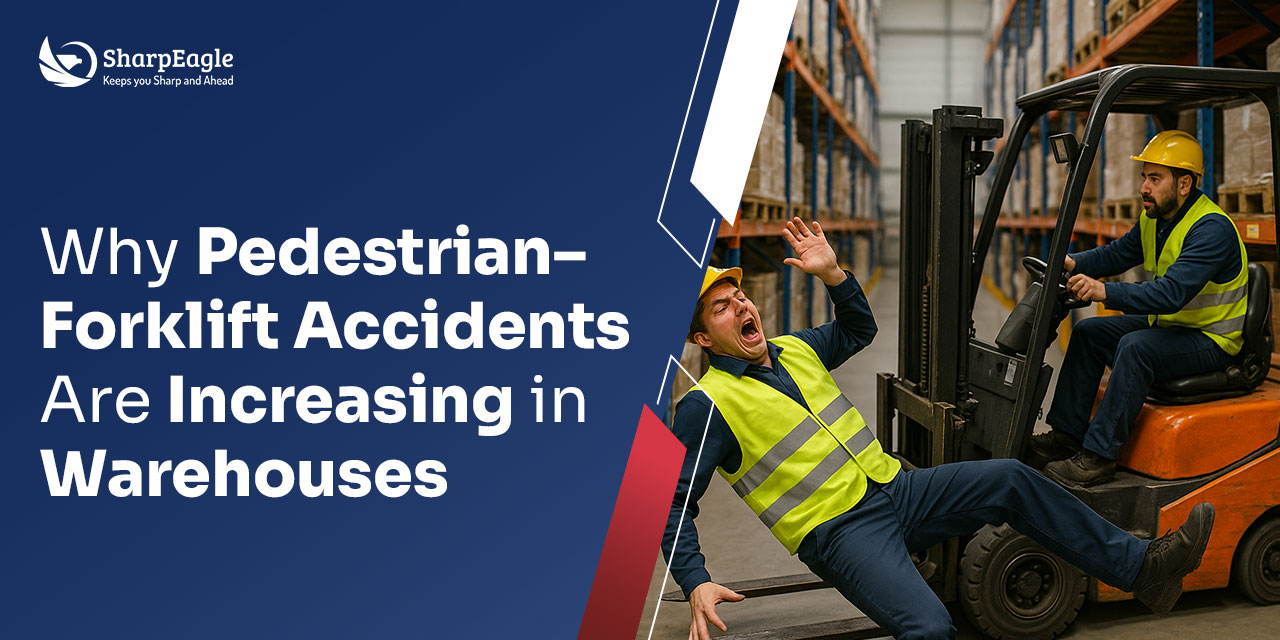
In busy warehouses, forklift cameras enhance pedestrian safety by providing operators with better awareness of nearby pedestrians. This added visibility helps to reduce the likelihood of pedestrian-related accidents immediately, creating a safer environment.
As companies continue using forklift cameras, they foster a workplace culture that prioritises caution and care. With fewer incidents, companies experience lower rates of compensation claims and foster a reputation as a safe and responsible employer, benefiting both the workforce and the organisation.
Forklift collisions are a major source of equipment damage, operational delays, and costly repairs. By offering a clear view of surroundings, a forklift camera system enables operators to prevent accidents and avoid collisions. This leads to a noticeable reduction in forklift accidents and collisions from the outset.
Preventing these accidents lowers equipment repair costs, minimises downtime, and extends the lifespan of machinery, positively impacting the company’s bottom line and operational efficiency.
Forklift cameras help operators accurately position loads, minimising the risk of mishandling goods. This results in a 40% decrease in product damage, immediately reducing losses related to broken or damaged items.
Consistently reducing damage improves inventory accuracy and reduces the cost associated with replacing or fixing damaged goods. Employees also feel more secure in handling high-value items, as their equipment supports them in managing loads more safely, promoting a sense of job security and responsibility.
Handling high or heavy loads presents a unique challenge. With a forklift camera system, operators gain a clear view of elevated areas, making it easier to place and retrieve loads safely. This capability reduces placement errors and prevents product damage in the short term, ensuring goods are managed with care.
Efficient high-load handling enables better use of warehouse space, minimises inventory mismanagement, and reduces the physical strain on operators. This efficiency fosters better space utilisation and minimises the potential for chronic injuries among employees.

Strict HSE regulations require improved visibility and safety systems. Forklift cameras help businesses stay compliant and reduce liability.
UAE warehouses operate in fast-paced environments with heavy forklift traffic. Camera systems improve efficiency and reduce accidents.
Saudi Arabia’s industrial growth demands advanced safety solutions. Camera systems enhance safety and productivity in large-scale operations.
Forklift camera systems deliver wide-ranging benefits, from increased operator efficiency and pedestrian safety to long-term improvements in product handling and compliance with regulations. These systems not only make daily operations safer and more efficient but also provide lasting advantages for both employers and employees, enhancing job satisfaction, safety, and operational cost-efficiency.
Discover how a forklift camera system can optimise your operations and meet the demands of a safer, more efficient warehouse environment with SharpEagle. Visit our website or book a free consultation call with our experts to learn more!
Q. Why is a forklift camera system better than just using mirrors?
Mirrors have limited coverage and often fail when loads obstruct view or when the operator’s line of sight is blocked. A camera system provides real‑time, wide‑angle views — front, rear, blind spots — ensuring safer manoeuvring even with bulky loads.
Q. Can forklift cameras help reduce product damage and losses?
Yes — with enhanced visibility, operators can place and retrieve loads more accurately, avoid collisions or drops, and handle high racks or tight spaces with greater precision — reducing damage to goods and racking systems.
Q. Do forklift cameras improve operator comfort and productivity?
Absolutely. By reducing the need to constantly turn, crane the neck or guess positions, camera systems reduce operator fatigue, improve ergonomics and allow faster, safer operation — boosting overall productivity.
Q. Are camera systems useful for training new forklift operators?
Yes — recorded or live video feeds help new operators learn safe manoeuvring, proper load placement, blind‑spot awareness, and forklift handling in various warehouse scenarios, shortening training time and reducing errors.
Q. How do forklift camera systems improve safety?
They eliminate blind spots and provide clear visibility of surroundings, allowing operators to detect pedestrians, obstacles, and hazards early. This significantly reduces accidents and improves overall workplace safety in high-risk environments.
Q. Are forklift camera systems required for compliance?
While not always mandatory, they help businesses meet safety standards and regulations in the UK, UAE, and Saudi Arabia. They also provide valuable evidence during audits and incident investigations.
Q. Do forklift cameras work in low-light environments?
Yes, most modern systems include night vision or low-light capabilities, ensuring clear visibility even in poorly lit warehouse conditions.
Q. Are forklift camera systems worth the investment?
Yes, they offer strong ROI by reducing accidents, minimizing product damage, lowering maintenance costs, and improving efficiency. Businesses across the UK, UAE, and Saudi Arabia widely adopt them for long-term benefits.